A Meeting with the Past and the Present
Introduction
Researching local history can lead to unexpected discoveries, linking the past with the present. This story is particularly interesting because this year, 2026, the United States of America marks 250 years since the Declaration of Independence in July 1776. David Hartley the younger (1731 Bath –19th December 1813, Bath), was an English statesman, inventor and MP for Kingston upon Hull. Although he was not strictly the Lord of the Manor of Sodbury, as his father (Dr David Hartley 1705-1757, had been, from c. 1735-1757. Hartley, the younger, held legal authority over the estates as the acting executor from 1794 until his death in 1813.
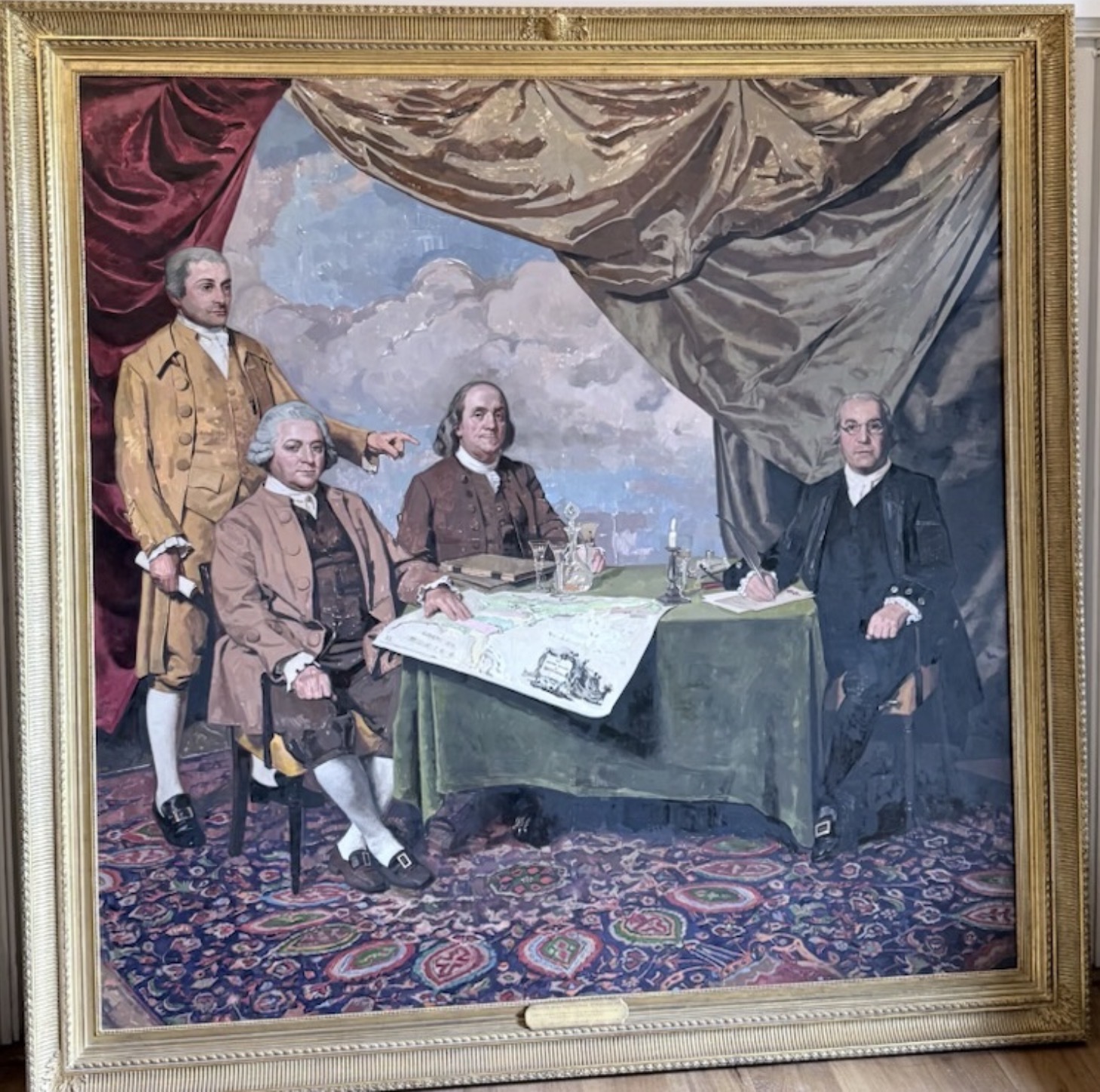
David Hartley, the younger, played an important part in the eventual peace settlement with America in 1783 As a British MP and diplomat, he was appointed to negotiate in Paris and became the sole British signatory to the 1783 Treaty of Paris, which ended the American Revolutionary War and formally recognised American independence.
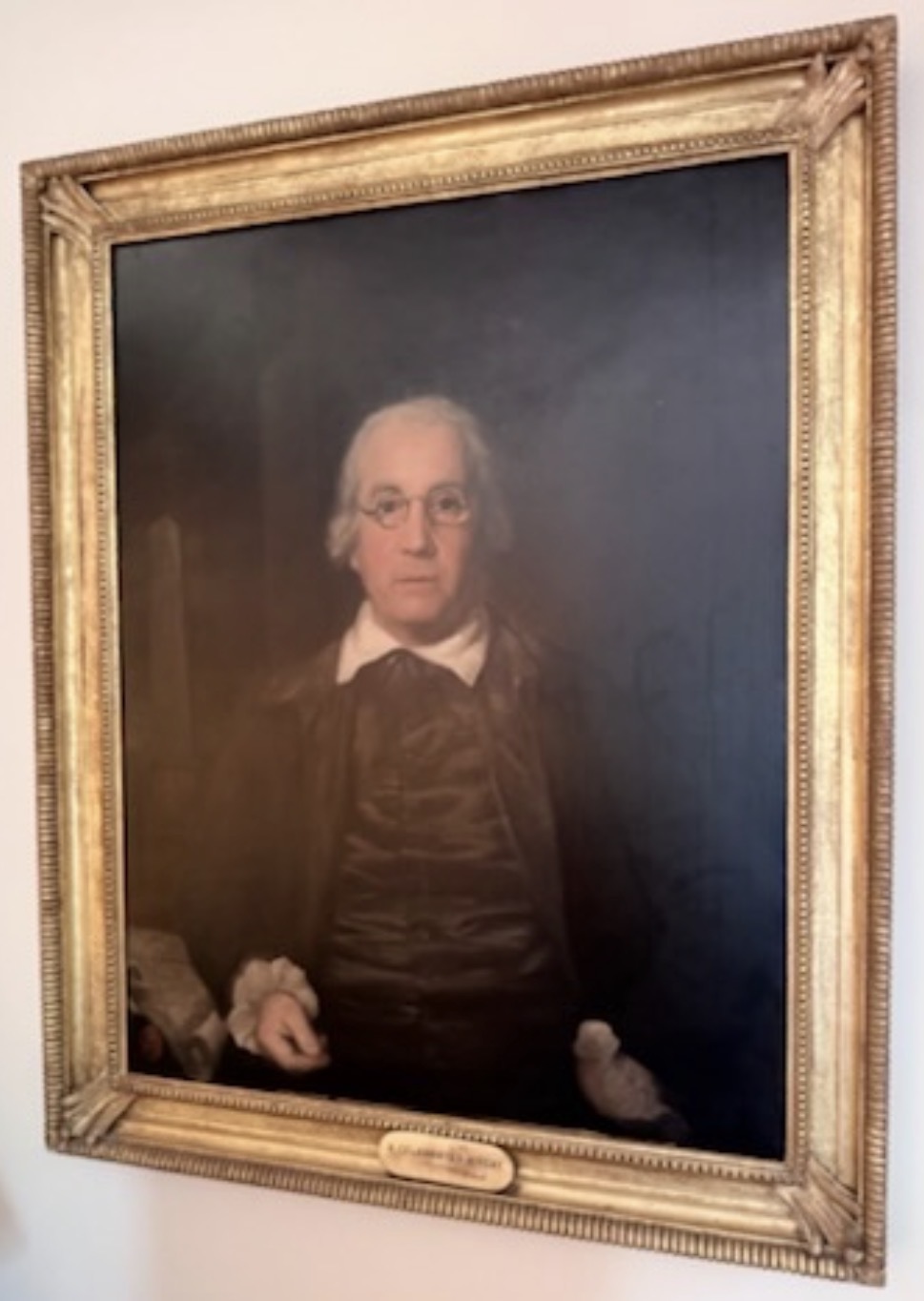
David Hartley was educated at Corpus Christi College, Oxford. He was a Fellow of Merton College all his life. He was a member of the House of Commons 1774-80, and 1782-84. He was a radical pamphleteer; He became a strong supporter of American independence and a friend and correspondent of Benjamin Franklin. He was appointed by George 111 to be British plenipotentiary, to sign the Treaty of Paris, September 3rd 1783. This ended the American revolution after much negotiation over the previous seven years. Hartley was also an early advocate of the abolition of the slave trade, proposing a motion on the subject in Parliament in 1776. Hartley believed in peaceful reconciliation between Great Britain and the American colonies. He was also critical of the French Revolution and the slave trade. Hartley wrote extensively on politics. His Letters on the American War, published in 1778 and 1779, argued for reconciliation between Britain and America. He later wrote sympathetically about the French Revolution and edited his father’s influential work, Observations on Man.
The Hartley Family and Old Sodbury
The local connection began through Dr David Hartley’s second wife, Elizabeth Packer (1713–1778), daughter of Robert Packer and Mary Winchcombe. The Packer family owned extensive estates in Gloucestershire, Oxfordshire and Berkshire. When the Packer line ended, the estates passed to Winchcombe Henry Hartley (1740–1794), Dr Hartley’s son. The Hartley family subsequently became closely associated with the Sodbury estates and Lyegrove House. The estates remained in the family for generations. Winchcombe Henry Howard Hartley (1788–1832) died without children, and the inheritance eventually passed through his nieces. The Gloucestershire estate was finally sold in 1906, mainly to the Duke of Beaufort. The wider family story continued in Bucklebury House, Berkshire, which was badly damaged by fire in 1832, and later restored by Derek Hartley Russell and his wife Pamela. Their son Willie Hartley Russell inherited the Bucklebury Estate.
A Modern Connection
Contact with Willie Hartley Russell, a descendant of the family, has added a fascinating modern dimension to our research. He explained that the family had commissioned a portrait of the four signatories associated with the Treaty of Paris. He noted another remarkable coincidence: David Hartley was the first MP to propose a motion concerning the abolition of the slave trade, and he did so in 1776. Hartley made a resolution in the House of Commons saying “the slave trade is contrary to the laws of God and the rights of men”. The Hartley family owned the Sodbury estates until 1906 and were also connected with Little Sodbury Manor. The family has retained an interest in the area’s history, including William Tyndale’s pulpit from Little Sodbury Church.
Legacy
David Hartley’s importance lies not in military achievement but in diplomacy, political conviction and his support for reconciliation and American independence. His connection with Benjamin Franklin and his role in the Treaty of Paris give a small South Gloucestershire village an unexpected link to one of the defining events of the eighteenth century. His story has also entered popular culture. Jeffrey Archer’s 2024 novel An Eye for an Eye, part of the William Warwick series, is set partly at Bucklebury and draws on the history of the Hartley family, including a fictionalised story surrounding a draft of the Declaration of Independence.
Conclusion
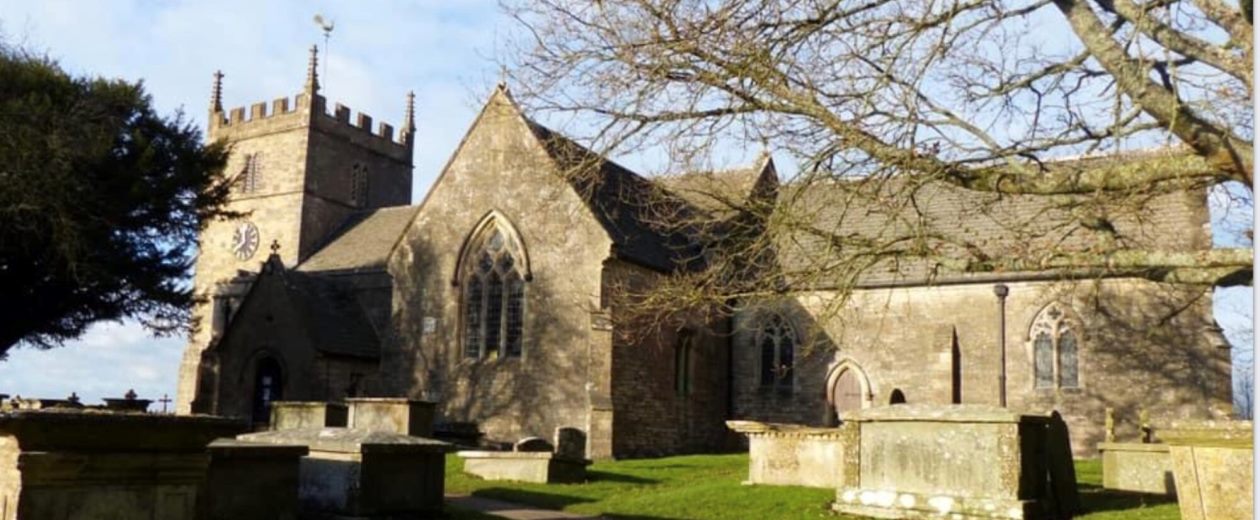
What began as an investigation into the history of Old Sodbury Church has revealed a remarkable connection between our local community, the Hartley family and the birth of the United States. David Hartley lies quietly in Old Sodbury Church, yet his life connected this small South Gloucestershire village with Parliament, Benjamin Franklin, the American Revolution and the Treaty of Paris. It is a fascinating example of how local history can open a window onto much larger events.
Reproduced with the kind permission of Jenny Smith